
Biblical Fiction: 3 Myths, 1 Warning, and 3 Reasons to Give it a Chance
The best Biblical Fiction engages the mind and the spirit, pulling the reader into the places, times, and stories of the Bible.
At its strongest, good Biblical fiction helps you interact with Scripture better. It makes the bible feel personal.
Even so, it has its critics.
Indeed, Biblical Fiction is often dismissed as unhelpful, or denounced as hurtful. All the while, many others aren’t even aware of what it is or what it’s supposed to do.
This begs the question, What is Biblical Fiction?
I like how Baker Book House defines it on their website: “Through vivid storytelling and rich historical detail, biblical fiction immerses you in the lives of the people who lived it—their struggles, their faith, their encounters with God.”
Any movie or play that recounts the Nativity story at Christmas time is Biblical Fiction.
Animated films like Dreamworks’ The Prince of Egypt or 2025’s David are popular examples of Biblical Fiction. Live action movies like The Passion of the Christ have made a lasting impact.
Though some are better than others, books, films, and television series such as these expose more people to Bible stories and encourage millions in their faith journeys.
Still, critics push back. For example, it doesn’t matter how many millions of people have been positively impacted by The Chosen—many Christians are adamantly against the series.
If people have a greater understanding of what Biblical Fiction is and how to interact with it, I know more people will see its value and give it a chance.
To do that, we need to look at the myths our Christian brothers and sisters are believing and perpetuating about Biblical Fiction.
Myth #1: Biblical Fiction Adds to the Bible
I think one area that causes Christians to be uncomfortable with Biblical Fiction is that it pairs the Bible with fiction.
It’s important to note that the Bible is not fictional; The Bible is the Word of God, inspired by God, and therefore infallible. If you take a Bible story and make it fictional, does that mean you’re treating the Bible as though it’s untrue?
This misconception leads to the ultimate criticism: the author of Biblical Fiction tells the story with fictional elements, including dialogue, setting descriptions, and sometimes even characters that aren’t in the Bible.
If a fiction author is using creativity to invent a conversation between Jesus and His disciples, doesn’t that mean the fiction author is adding something fictional to the true account of Scripture?
No.
No author of Christian Fiction, myself included, views his or her imagination as being equal to Scripture.
We don’t “fix” a Bible story by inserting our own ideas. The Bible doesn’t need to be fixed!
It is true that Biblical fiction does add fictional detail to flesh out a scene. The function of this detail is to help the imagination think more about the Bible story and its context, not less.
Fictional details and additions are not meant to deceive the believer or taint the Biblical witness.
The fiction in Biblical Fiction is actually meant to illustrate the text, not to distort it.
Myth #2: Biblical Fiction Breaks the Second Commandment
This criticism is one I’ve seen online, especially by believers against The Chosen and other series and movies that depict the life of Jesus.
The theology here comes from a curious interpretation of the second commandment, which prohibits people from making and worshiping idols.
Some theological traditions claim any depiction of Jesus in art or any form of visual media is equal to making a graven image. The logic behind this seems to be that when people consume this sort of media, they have a wrong picture of Christ in their mind, and they end up inadvertently worshiping an image of Jesus or an actor portraying Jesus instead of the real Jesus.
Though I recognize that it is problematic when people picture actors like Jim Caviezel or Jonathan Roumie while praying, this is something that lands on the responsibility of the individual viewer, not the person making the film or series.
No Christian makes a Biblical Fiction narrative with the intent of leading Christians to worship a false image of Jesus.
Projects like The Chosen are designed to bring people back to Scripture, not lead them away from it.
One might ask, doesn’t the invention of extra-biblical dialogue and actions for Jesus create a false version of Him?
Indeed, if the words Jesus speaks in a book or movie don’t match what is spoken in the Bible, aren’t we just putting words in Jesus’ mouth?
No, and no.
Honest authors of Biblical Fiction approach their craft with reverence. Though there are fictional stories that involve Jesus, Jesus’ words and actions are written to be consistent with how he acts and speaks in Scripture.
Even when an author does this imperfectly, the story draws you back to the account of Scripture. Based on the words of the Bible, the discerning believer with help from the Holy Spirit will see where the real Jesus diverges from an author’s limited understanding.
In whatever case, an idol version of Jesus is never being worshiped, so Biblical Fiction clearly does not break the second commandment.
Myth #3: Biblical Fiction is Predictable
Of all the myths, this one might be the biggest deterrent for people to give Biblical Fiction a chance.
You might think, “I know the Bible story already. I don’t need to read it again with more words when I already know what’s going to happen.”’
There is merit to this perspective.
If I already know a Bible story, I’m not going to be in suspense.
However, the point of Biblical Fiction is not suspense, it’s immersion.
If the point was to just tell a Bible story, you can read the story much faster in the Bible. Biblical Fiction, however, slows the pace on purpose.
It invites you to imagine the place and time of the narrative, and it gives you space to feel and fully experience what the historical people in the Bible were feeling and experiencing.
Another consideration: Even though you can predict what will happen to the Bible characters in a Biblical Fiction story, you cannot always predict what will happen to the fictional characters created by the author to help you experience the story. Also, there is an element of suspense when Biblical characters face a fictional situation. Of course, it’s up to the author to make the historical Bible characters behave consistently with how they’re presented in Scripture.
Once again considering The Chosen, I think of Ramah and Thomas as perfect examples of this.
Ramah is a fictional character present for much of the action of the story, and there’s no biblical account to help us predict what will happen to her.
Thomas is a disciple and present in the biblical account, but how the writers used fictional details to build his character didn’t detract from his depiction in the Bible but actually made his character feel even more believable.
Myths aside, before I fully convince you to dive into the world of Biblical Fiction, I do want to give one word of caution.
Warning
Do not accept everything you read at face value.
Though I generously assume most authors of Biblical Fiction to have good intentions, and I even assume they approach their work with careful study and deep respect for the sacred Scriptures, it’s important to remember that no person is perfect, and no art will be perfect.
The Bible encourages us to test all things.
Part of your testing and discerning should be on your own heart and how you’re responding to what you are reading and watching.
Am I being led closer to God or further from God at this time?
Maybe the things you’re reading aren’t even bad, but they’re just not good for you in this season of life.
If you find yourself thinking about your favorite Biblical Fiction stories more than the Bible, it’s possible you might want to take a break from these stories.
Bottom line: Biblical Fiction is designed to lead the reader closer to the Bible and closer to God.
If it’s not achieving that goal in your life, then it’s not for you.
If it’s causing confusion, then maybe it’s not helpful.
If it’s making you question your theology, that could be good or bad. I say it’s an invitation to study theology and dive even deeper into what the Bible says.
Now that we’ve tackled the myths and given a word of warning, let’s take a look at the good reasons to give Biblical Fiction a chance.
Reason #1: Invitation to Exegesis
Fictional storytelling leads us closer to truth, not further from it.
Any pastor or Bible college student will tell you how important exegesis is to handling the biblical text. In essence, it’s looking at the Bible on its own terms.
This helpful article from Logos Bible Software’s blog puts it like this: “Simply put, exegesis is not about discovering what we think a text means (or want it to mean) but what the biblical author meant.”
Good Biblical Fiction does the work of exegesis in the writing process and tells the Bible story within the historical context. The author actually brings exegesis front and center, presenting the historical context in a lively, realistic, easy-to-understand way.
When you dive into Biblical Fiction, you understand the Bible text better, not worse, and the questions the story raises leads you into a deeper, more robust study of the Bible than you would’ve done before considering those questions.
Even when the author is forced to speculate and ask “What if?”, the author actually brings you into that speculation.
Reason #2: Invitation to Wonder
Storytelling engages the heart and mind, and imagination bridges them together.
When we use our imagination with Scripture, we can more easily stand in awe and wonder of what God has done.
These kinds of stories help us to behold what we cannot see.
When you consider the biblical setting and culture and what it was like to live in those days, you more easily see the perspective of the biblical characters.
Sometimes, we read the Bible for information and let the text become so familiar to us that we forget to engage our hearts with these familiar stories.
If your biblical imagination feels stuck, and if the bible feels boring in anyway, Biblical Fiction might be a tool to help you see the Bible with fresh eyes and emotions.
Reason #3: Invitation to Worship
From wonder, the logical next step is worship.
Through Scripture, our minds are renewed by the truth and our hearts are transformed by the Spirit of God.
By slowing down with the stories of the Bible and considering them with the mind and the heart, your imagination doesn’t lead you to worship a fiction—the fiction leads you to worship the one true God.
In Conclusion: The Paradox
Biblical Fiction is not dangerous or oxymoronic.
When used rightly, stories of Biblical Fiction lead us deeper into the Word of God, and closer to His heart.
I admit, it’s a paradox.
Fictional descriptions, invented dialogue, extra-biblical information, and sometimes fabricated characters come together to do the unexpected: It makes the real, unchangeable truth of Scripture feel even more real than what we already believed it to be.
By filling in some gaps and bringing the reader into the story, Biblical Fiction gives the reader a profoundly reverent journey into the sacred text.
Somehow, fiction makes the truth feel real.
I believe the Holy Spirit can and does use Biblical Fiction to help us process Scripture.
All that’s left is to give it a try and see if it helps you too.
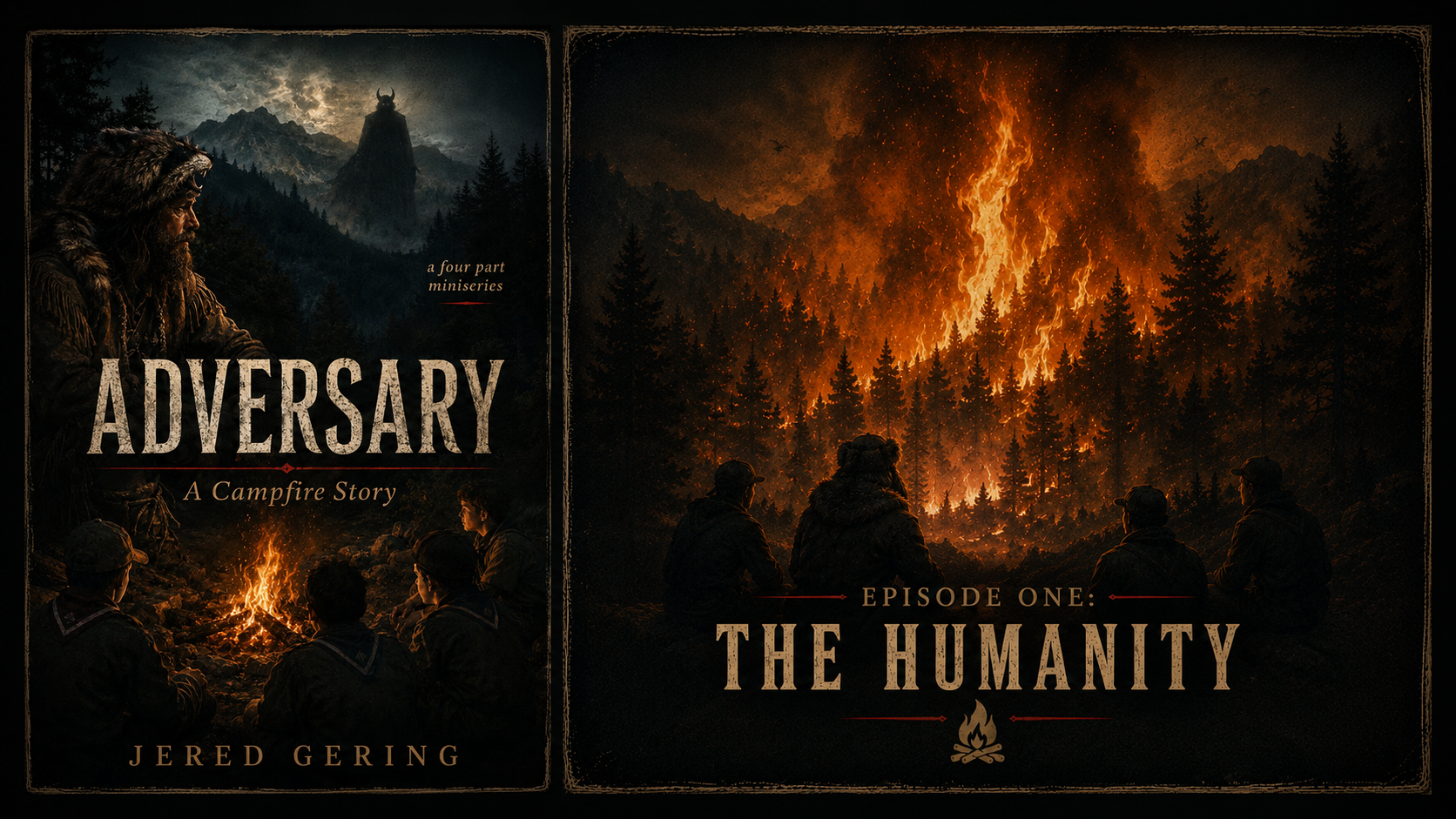
PS: If you’d like to give Biblical Fiction a try but aren’t sure where to begin, I invite you to read my new short story miniseries Adversary: a Campfire Story, which retells the biblical account of Jesus’ wilderness temptation from the devil’s perspective. You can learn more about it here.