Will Greta Gerwig and Netflix’s Narnia Pass the Rafe Test?
Will Greta Gerwig and Netflix’s Narnia Pass the Rafe Test?
Rafe Judkins’ treatment of The Wheel of Time should serve as a warning, not a template.
As Netflix’s new Narnia movie draws near, my excitement is greater than I’ve had for any movie in recent memory.
After all, it’s exciting! The Magician’s Nephew has never been adapted to film before, and there are things in it I’ve always wanted to see on the big screen.
The Yellow and Green Rings. The Wood Between the Worlds. The Bell and the Hammer. The Creation of Narnia.
You get the picture.
But with the excitement, there’s also a mounting anxiety.
Will they stick the landing?
Will the film live up to my sky high expectations?
Truthfully, I’m not expecting perfection. I’m not even expecting everything to be just like the book.
But there is one area with which I’m judging Narnia: The Magician’s Nephew.
The Rafe Test
The Rafe Test is based on my analysis of Amazon’s Wheel of Time series. If you aren’t familiar with the canceled fantasy series, buckle up because we’re jumping down a rabbit hole!
The Wheel of Time
The Wheel of Time book series is a fourteen-volume epic spanning thousands of pages.
It is one of the best-selling fantasy series of all time, and it’s made a ginormous impact in the fantasy genre.
The books were released from 1990 through 2013, and they finally received a high-budget TV adaptation through Amazon Prime Video in 2021.
It had amazing cinematography, beautiful costumes, and nearly perfect casting.
I’ll always appreciate the series for the greatest gift it gave me and thousands others—it introduced me to the world of The Wheel of Time and hooked me enough for me to read the books.
Before the tv series, I’d heard of the books, and I always figured I’d get around to reading them eventually, but after the first season aired, my wife and I dove in head first.
However, the TV series had a flaw—a fatal flaw that in my opinion contributed to its inevitable downfall.
The flaw?
In an attempt to re-present the story for a modern television audience, the TV series reinterpreted the story through a modern television lens, sometimes allowing Judkins’ interpretation to speak louder than Jordan’s.
It’s not that Rafe Judkins and the other producers didn’t trust the source material to speak for itself.
I believe it’s tragically more innocent than that. Rafe had been a fan for so long that his interpretation of the story became inextricable from the books themselves.
Instead of an adaptation centered primarily on Jordan’s Wheel of Time, we got a reinterpretation shaped by a personally invested, longtime fan.
This isn’t even to say the TV series is bad. I’ll always have a soft spot for the show because it brought me to Robert Jordan’s world. If the show were complete trash, I wouldn’t have wanted to try the books at all.
To unpack this, I want to make one thing clear: Rafe Judkins is a fan. A mega fan, in fact.
But an equally important distinction is this:
Being a fan isn’t enough.
Being a Fan isn’t Enough
The Wheel of Time is important to Rafe Judkins. One would think he would’ve been the perfect choice as showrunner. And that’s exactly where the danger lies.
What we find in the series instead is a series of befuddling decisions that makes me think the source material wasn’t trusted to stand on its own.
One of the most resonant parts of the book series is how convincingly the author depicts the relationships between men and women.
The dynamics of gender conflict represents a strong through line for the series. The TV series plays with these themes in an interesting way, but it also reinterprets them in ways divergent from they’re presented in the books.
My theory is not that Rafe Judkins purposely undermined Robert Jordan’s vision.
Rafe’s mistake didn’t even start out as a mistake. It started with a simple love of the books.
Rafe’s mistake was rooted in one of the biggest compliments a fan can give an author: he made the book series his own.
I think it’s fair to say the Wheel of Time books weren’t adapted in a way for the story to speak for itself onscreen. One fan’s reinterpretation adapted the story with a filter distinct from the author’s.
When I say the story should speak for itself, what I mean is this: The onscreen adaptation should present the themes of the book in a way that coheres with how those themes are presented in the book.
Rafe Judkins’ version of The Wheel of Time dealt with the same themes found in the books, but the show often pushes and interprets those themes beyond what the books provide.
The bottom line: The Wheel of Time didn’t stick to Jordan’s vision because it was remade in Judkins’.
Maybe I’m being too harsh. After all, every showrunner and director has to make calls in adapting a work. There will always be material that must be skipped or changed.
The thing about The Wheel of Time is that because it was so close to one fan’s vision, it no longer matched the story other fans had fallen in love with.
Some of Rafe’s decisions make logical sense. It makes sense why he’d want to age up the characters. it’s an adult story and most of the series takes place when they’re adults. It makes sense why Egwene was grouped in with the boys as a contender for being the Dragon Reborn. Her motivation for tagging along in the book is admittedly thin. It makes sense why he’d want to introduce the White Tower in season one. There might not have been enough screen time for it to be properly developed in future seasons.
The list goes on.
But what happens when the first season starts to lose its resemblance with the first book?
One possible reason The Wheel of Time couldn’t find its footing—it lost a large portion of the books’ fan base from the start, and those fans couldn’t be won back fast enough.
For a property like The Wheel of Time, you need the backing of a passionate fandom if you hope to go the distance.
Even though it’s a dominant series in a popular genre, it doesn’t have the same cultural capital of Lord of the Rings or Harry Potter.
It’s hard for any fantasy series to find its footing and win new fans.
Alienating some of the people most likely to champion the adaptation certainly doesn’t make that challenge any easier.
So, What’s This Have to Do with Narnia?
This is where I devised the Rafe Test.
One of the most important considerations about the production of Narnia: The Magician’s Nephew is that it’s directed by the legendary Greta Gerwig.
And Greta Gerwig is a fan of Narnia.
She’s talked a lot about how formative Narnia was for her when she was younger. She’s talked about approaching the story with reverence.
These statements give me hope that it will be great, that it will live up to expectations.
But then I remember: Rafe was a fan too.
I have no doubt: Greta Gerwig loves The Chronicles of Narnia.
But I have to wonder: Does she trust and respect Narnia enough to let it stand on its own?
And more importantly: Will her interpretive lens speak louder than the story itself?
Don’t get me wrong. If she respects and trusts Lewis’ masterpiece series, we will still see changes.
We will also see the film have a thematic cohesion with the world Lewis created.
The Lion in the Room
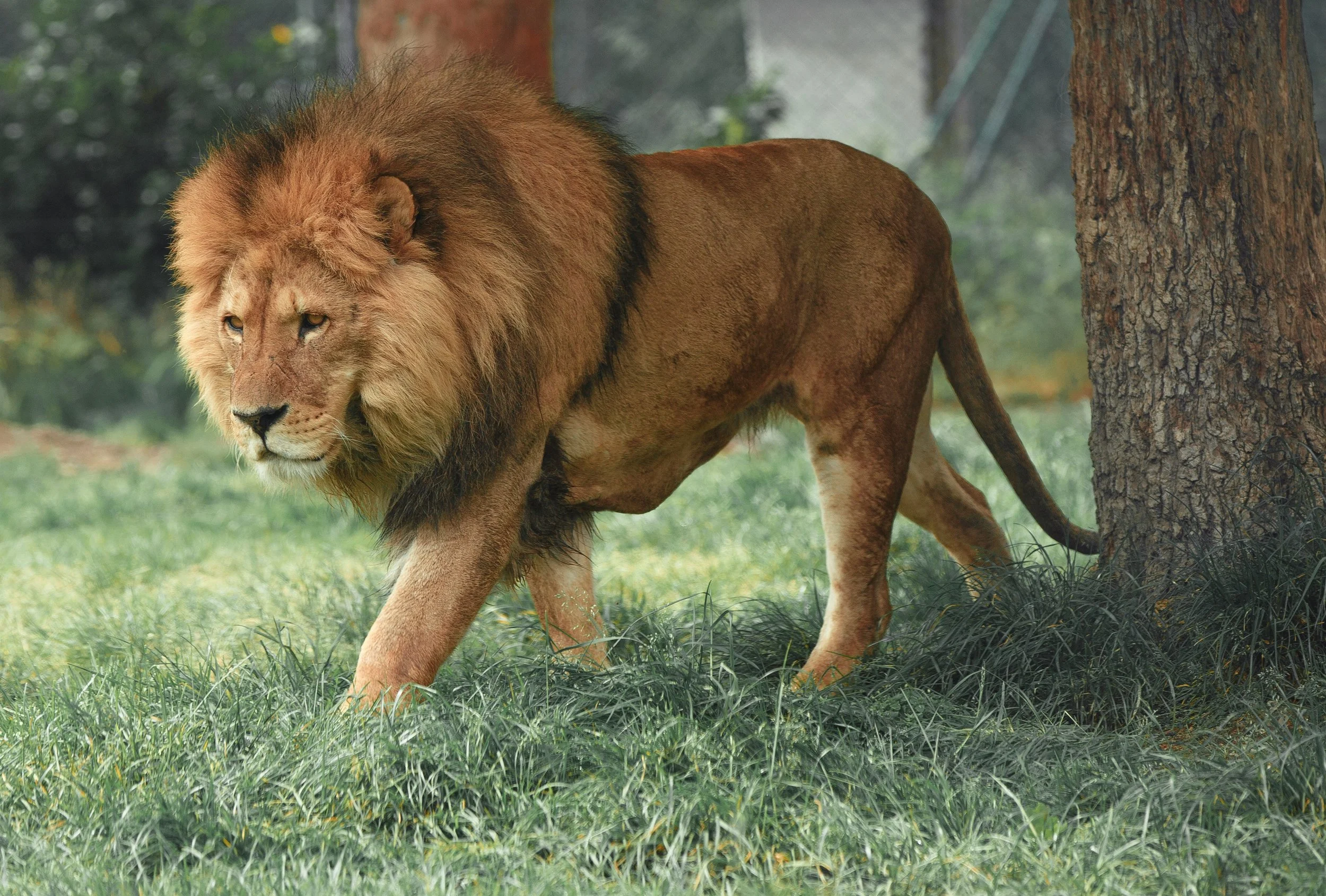
Of course, the biggest elephant in the room is Aslan, the great lion himself.
Early in the film’s production, rumors circulated that Meryl Streep was in talks to voice Aslan. Meryl Streep was eventually confirmed as part of the cast, but her role was not initially revealed. The rumor understandably made some Narnia fans nervous.
And I can imagine the temptation.
What if a director wanted to take a subversive approach to Lewis? What if Aslan were reimagined rather than simply adapted?
One could argue that lionesses are even more fierce than male lions. What’s the harm in a little gender swap?
I don’t actually expect Gerwig to do this. But that’s precisely why the thought experiment is useful.
Aslan is not an ambiguous character. His identity is clear, and as a character he’s resonated with fans for generations.
If one of the most iconic aspects of a book series is intentionally subverted, can we really believe that the rest of the themes and characters are safe?
Aslan is a sacred, revered character. If he’s undermined in the first movie, I highly doubt we’ll see all seven stories completed.
The fans won’t stand for it.
The Wheel of Time tv series couldn’t build a big enough audience from a divided fandom. Without the energy of a unified fan base, not enough new fans were wooed and invested.
This effect will be even worse if Netflix’s Narnia series spurns the Narnia fandom.
Narnia does have a fandom. This adaptation can be successful.
But can an accomplished director in the 2020s trust a mid-twentieth-century story to be told on its own terms?
The Rafe Test isn’t whether Gerwig changes Narnia. Of course she will. The question is whether her interpretive lens speaks louder than Lewis’s story.
Because loving a story doesn’t mean we have to make it our own.
A fan knows what they love about a story, but an adapter has to know when to get out of the way.
After all, Aslan isn’t a tame lion.
He doesn’t need to be remade in Greta Gerwig’s image.
He needs to remain Aslan.
And if Gerwig can do that, I think Narnia is in very good hands.
Only time will tell.